Showing posts with label orthodontics beirut lebanon. Show all posts

Thursday, June 12, 2014

How does wisdom tooth removal affect orthodontic care?


How does wisdom tooth removal affect orthodontic care?


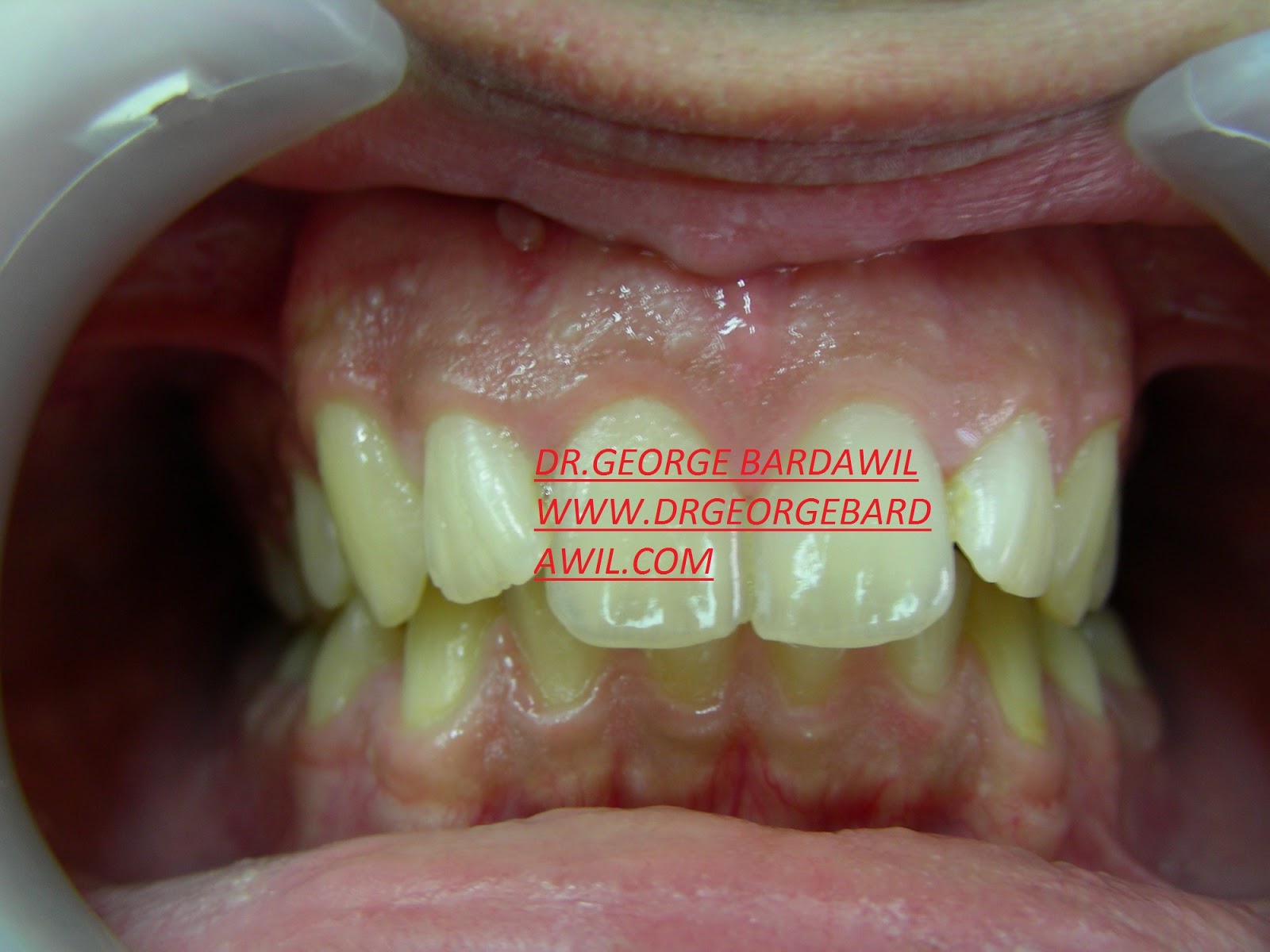
The purpose of braces and other forms of orthodontic treatment at Dr.George Bardawil offices  is to correct malocclusion, also known as crooked or crowded teeth, or “bad bites.” Past orthodontic practice dictated that wisdom teeth be removed, especially in cases of crowding.
The wisdom teeth are the last teeth to come in, and are officially known as the third molars. The teeth typically erupt, or break the surface of the skin, in young people between the ages of 13 and 20.
Sometimes, wisdom teeth are impacted. That means they cannot break through the gum tissue. This typically happens when the mouth or jaw is too small to accommodate the teeth. Impacted wisdom teeth can become infected, and some dentists and orthodontists may want to remove them as prophylaxis to prevent possible future infection.
Justification for removing wisdom teeth
Dr. Bardawil will tell you that in some cases, wisdom teeth attempt to come in the wrong way, either tilting in the jaw, or sideways. If the mouth is too small to accommodate these additional teeth, they inevitably become impacted. Swelling or infection of the gum flap above an impacted wisdom tooth may cause pain. The greatest danger is pericoronitis, a potentially dangerous infection that can occur in the gum area around an impacted wisdom tooth, or around a wisdom tooth that has erupted.
Orthodontists base their decision to remove wisdom teeth on each patient’s individual circumstances. To learn more about the impact wisdom teeth have on orthodontic treatment, or to schedule a visit with Dr. Bardawil


Dr.george bardawil -ORTHODONTIST www.drgeorgebardawil.com, info@drgeorgebardawil.com, Invisalign Gold premier provider, speciality clinics center, st maamari,12th floor hamra,beirut lebanon Hamra clinic 961-1-747644 Fanar clinic 961-1-873718 mobile 961-3-542724

Wednesday, April 17, 2013

Misconceptions About Orthodontics


While everyone understands that a dentist takes care of teeth, not everyone is aware of what an orthodontist does. This confusion sometimes leads to misunderstandings about what Our offices does for our patients and how exactly our team can help them. Let’s take a closer look at a couple of the myths and misconceptions about orthodontics.

Perhaps the biggest misconception about the orthodontist is that we’re just like your family dentist. The truth is, we’re actually very different. While it’s true that both orthodontists and dentists care about helping you enjoy a lifetime of good dental and oral health, we go about achieving this goal in different ways. For instance, if you need to have a cavity filled, you probably won’t make an appointment to see me. Dentists are the health professionals to see if you’re concerned about a cavity or need a filling. A dentist can also treat gum disease, tooth decay, toothaches, and other common oral health problems.

People see an orthodontist for very particular services. Most of the patients we see on a daily basis are here because they have braces, or they need to be fitted with braces or another form of tooth-straightening device. In other words, they consult an orthodontist when they are concerned about the alignment of their teeth. As a child grows up, his or her teeth may come in crooked. This can happen for a number of reasons, so it’s important for an orthodontist to take a look at a child’s teeth at about seven years of age. At that age, it’s possible to detect any problems that have not become too advanced to treat easily. Your family dentist may also refer your child to an orthodontist once the adult teeth have fully grown in.

Another common misconception about orthodontists is that we only treat children. It’s true that when you visit an orthodontic clinic you’re apt to see a lot of young kids, but you’ll also see teenagers, college students, and adults. Because crooked teeth can be caused by a number of different factors, it’s entirely possible for someone to require orthodontic treatment at any age.

If you want to know more about the practice of orthodontics or what your orthodontist can do for you, then simply ask our team. It’s best to get answers to your specific questions directly from the person who will be treating you. While you’re sure to find Internet resources helpful, there really is no substitute for the personal attention you’ll get during your appointment.


Dr.george bardawil -ORTHODONTIST www.drgeorgebardawil.com, info@drgeorgebardawil.com, Invisalign premier provider, speciality clinics center, st maamari,12th floor hamra,beirut lebanon Hamra clinic 961-1-747644 Fanar clinic 961-1-873718 mobile 961-3-542724

Friday, March 22, 2013

Before and after treated by Dr.Bardawil

Dr.George Bardawil uses the finest “state-of-the-art” treatment services in a friendly, caring, and enjoyable atmosphere. Excellent patient care while wearing braces and your satisfaction are our primary objectives. Our results show in beautiful smiles that last a lifetime.
Our custom-built facility allows our orthodontists to offer the most technically advanced orthodontic care available in Beirut -Lebanon  in a friendly and fun environment.


Dr.george bardawil -ORTHODONTIST www.drgeorgebardawil.com, info@drgeorgebardawil.com, Invisalign premier provider, speciality clinics center, st maamari,12th floor hamra,beirut lebanon Hamra clinic 961-1-747644 Fanar clinic 961-1-873718 mobile 961-3-542724

Thursday, March 21, 2013

Class 3 malocclusion

Class 3 malocclusion


Class III: Mesiocclusion (prognathism, negative overjet) In this case the upper molars are placed not in the mesiobuccal groove but posteriorly to it. The mesiobuccal cusp of the maxillary first molar lies posteriorly to the mesiobuccal groove of the mandibular first molar. Usually seen as when the lower front teeth are more prominent than the upper front teeth. In this case the patient very often has a large mandible or a short maxillary bone.To learn more about orthodontic treatment options visit us at www.drgeorgebardawil.com


Before Treatment-Case Treated by Dr.George Bardawil


After Treatment-Case treated by Dr.George Bardawil

Dr.george bardawil -ORTHODONTIST www.drgeorgebardawil.com, info@drgeorgebardawil.com, Invisalign premier provider, speciality clinics center, st maamari,12th floor hamra,beirut lebanon Hamra clinic 961-1-747644 Fanar clinic 961-1-873718 mobile 961-3-542724

Friday, March 8, 2013

Dr.george bardawil -ORTHODONTIST www.drgeorgebardawil.com, info@drgeorgebardawil.com, Invisalign premier provider, speciality clinics center, st maamari,12th floor hamra,beirut lebanon Hamra clinic 961-1-747644 Fanar clinic 961-1-873718 mobile 961-3-542724

Patient question: “What is malocclusion?”


This is a question we hear all the time. Malocclusion, or what we call having a “bad bite,” is the improper alignment of teeth and/or jaws. When your teeth and jaws are not properly aligned, it may impact your bite, the ability to properly care for your teeth, your gum tissue health and even your appearance. Most people will experience some degree of malocclusion, but it generally is not severe enough to require orthodontic treatment. If your malocclusion is serious enough, however, treatment may be necessary to correct the issue.
Untreated malocclusion can lead undesirable mouth problems, including tooth decay, gum disease, or chipped and cracked teeth. The most common solution for malocclusion, of course, is orthodontic treatment. The actual course of treatment, including the length of time you will require braces, will be determined by severity of your malocclusion. The goal of your treatment is to move your teeth into the proper position and correct any misalignment in the jaw.
We use the most advanced technology in the field in order to ensure that you receive the best possible results. If you have any questions about malocclusion or about starting your orthodontic treatment, please call our office!

Thursday, January 17, 2013

Insignia braces


Insignia Braces, Beirut lebanon

For the best thing to happen to your smile since the toothbrush, look no further than Insignia braces. Jacksonville Beach patients can now experience this revolutionary technology first hand at Patel & Carden Breaches Orthodontics. What makes Insignia different? This system combines your doctor’s education, experience and insight with 3-D computer modeling to produce your prefect smile, before the braces are ever applied!
First, during your free consultation, your orthodontist will determine if Insignia braces are right for you. Next, precise impressions are taken of your teeth and bite which are then sent off to the Insignia Smile Lab. Your impressions are scanned and brought into a 3-D modeling system as a single upper and lower jaw. Then, through specialized software and a team of computer modeling technicians, each tooth is separated so it can be digitally manipulated. Your Orthodontist is then able to digitally place your custom brackets on each tooth, time-lapse your smile forward and see the results. Brackets are adjusted and this process is repeated until the desired result is achieved.
Your next meeting with the doctor will be to approve your new smile. The approval is sent back to the Insignia Smile Lab and your custom brackets are manufactured. This initial process can take up to 35% off the treatment time as fewer physical adjustments are necessary since they were done digitally. By taking the “guess work” out of orthodontics, you will achieve the smile you’ve always wanted, faster than you ever thought possible.
During the application process, each of your custom fit Insignia brackets are positioned on your teeth precisely where the computer model indicated. Once applied, the brackets are fitted with one-of-a-kind wires made especially for you based on the treatment plan set by your orthodontist. You will  in several weeks to check on the progress of the treatment. Many patients experience the complete movement of their teeth within the firvisit our officest 60 days.
So what are you waiting for? Get the smile you’ve always wanted, and deserved. It’s your time to shine with a new Insignia smile! Simply complete the quick contact form on the right to schedule your free consultation with Patel & Carden Beaches Orthodontics. You can also learn more from the the manufacturer by visiting Insignia’s website.


Dr.george bardawil -ORTHODONTIST www.drgeorgebardawil.com, info@drgeorgebardawil.com, Invisalign premier provider, speciality clinics center, st maamari,12th floor hamra,beirut lebanon Hamra clinic 961-1-747644 Fanar clinic 961-1-873718 mobile 961-3-542724

Tuesday, November 20, 2012

RETAINERS AND ORTHODONTICS.


Braces are an investment in your smile. When your teeth reach a desired straightness, you’ll have a beautiful smile, but it’s important to keep it that way! You can accomplish this with a retainer.

A retainer is a small, custom-fit device that reinforces the new position of your teeth after your braces are removed. But for many patients, especially the youngest ones, wearing a retainer may seem like an annoyance. So exactly how long after your braces come off should you wear your retainer?

Graduation of Wear Time

When we remove your braces, we will evaluate the condition of the bone structure surrounding your teeth and determine how well it is adjusting to the new position of your teeth. For the first few months, we may require you to wear your retainer both day and night, except during meal times and for brushing and flossing.

As the bone and gum tissues adjust to your new smile, we may determine that you need to wear your retainer only at night. After about one year of wearing the retainer every night, you may be able to take a couple of nights off each week.
However, we do not recommend ever stopping permanently. To best secure the position of the teeth, especially through future extractions and oral health changes, wearing your retainer a few nights a week will be necessary for many years.

Considerations

If you are concerned about your appearance when you wear a retainer, there are many that can be worn discreetly. You could choose a clear plastic one that is less obvious during the months immediately following removal of your braces. When you change to night wear only, clear wire retainers are available for minimal visibility as well.

Remember, wearing your retainer is an investment in your smile. If you fail to wear it consistently, the tissues that support your teeth will be unsupported, and you may begin to experience noticeable shifting. You’ve worked hard to get that beautiful smile — your retainer will let you keep it!


Dr.george bardawil -ORTHODONTIST www.drgeorgebardawil.com, info@drgeorgebardawil.com, Invisalign premier provider, speciality clinics center, st maamari,12th floor hamra,beirut lebanon Hamra clinic 961-1-747644 Fanar clinic 961-1-873718 mobile 961-3-542724

Saturday, October 27, 2012


What Makes the Damon System of Braces Different?

Until recently, the only option for people who need braces was the traditional type in which a wire threads through a bracket that attaches to each tooth. Both the wires and the brackets extend across the breadth of the mouth. Pressure from the wires moves the teeth into the proper position.
For most patients, traditional braces are far from ideal. They are often very uncomfortable for the patient because the ties that connect wires to the teeth prevent them from moving. Ties are used to create heavy force, but the force cuts off the blood supply between the root of the tooth and the bone surrounding it. Teeth can’t move until the blood flow is restored.
The Damon System aims to guide teeth gently and continuously, and reduce the use of force. Patients have reported that the entire experience of wearing braces is a lot more comfortable.
How the Damon System Works
Unlike traditional treatment with braces, the Damon System doesn’t require the removal of teeth or the use of palatal expanders. The system uses unique self-ligating braces, in which a specialized clip with a “door” replaces elastics or other ties. The “door” guides the archwire, and allows the teeth to move gently into the proper position. Because of the increased flexibility of the self-ligating brace, it exerts less pressure on individual teeth, and this means you won’t have to get adjustments as frequently.
Another advantage is the fact that the gentler, low-friction force means you won’t experience the long-term discomfort from intense pressure on your teeth, or the tight wires that are so common with traditional braces. Because there are no ties, Damon braces are also much easier to clean.
Three Components of Damon System
There are three components of the Damon System that create faster results, require fewer appointments, and cause less discomfort for patients.
1. Because the Damon System doesn’t use metal or plastic ties, there is no need to tighten the wire on the braces.
2. Lightweight shape-memory wires allow teeth the freedom to move faster, without the need for as many adjustments as occur with traditional braces.
3. The Damon System realigns teeth and enhances facial appearance without extracting teeth or using rapid palatal expanders. The slide mechanism of Damon braces facilitates faster, more comfortable repositioning of your teeth.
Damon System technology can offer you the option of braces that require fewer adjustments, with less pressure on the teeth and the entire mouth. A discussion with Dr.Bardawil will help you determine whether the Damon System is the best option for you or your child.
Dr.george bardawil -ORTHODONTIST www.drgeorgebardawil.com, info@drgeorgebardawil.com, Invisalign premier provider, speciality clinics center, st maamari,12th floor hamra,beirut lebanon Hamra clinic 961-1-747644 Fanar clinic 961-1-873718 mobile 961-3-542724

Friday, June 17, 2011

BEAUTIFUL SMILE!!!!!! BEFORE AND AFTER TREATED BY DR.GEORGE BARDAWIL

Beautiful smiles from Dr.george bardawil-orthodontic specialist

Dr. Geoerge bardawil  enjoy providing exceptional orthodontic care in a fun, friendly environment. This includes sharing photos and testimonials on our office’s Facebook page and other social networks. We always love receiving positive feedback from patients after they complete treatment, which is why we wanted to share a great photo .

before
 Congratulations to Chantale from our Fanar clinic.


smile before


after


after
 Dr.george bardawil
http://www.drgeorgebardawil.com/
 Invisalign premier provider
 speciality clinics center
 st maamari,12th floor
 hamra,beirut lebanon
   HAMRA OFFICE tel 961-1-747644
   FANAR OFFICE  tel 961-1-873718
 mobile 961-3-542724

Wednesday, June 8, 2011

Common orthodontic problems by Dr.George Bardawil

www.drgeorgebardawil.com
COMMON CAUSES
Malocclusion is often a genetic
problem. Trauma and other medical conditions such as birth defects may contribute problems as well. The following may also cause bad bites:

  • Finger-sucking or other oral habits
  • Crowding, misplaced or blocked-out teeth
  • Mouth breathing
  • Dental disease
  • Abnormal swallowing (tongue thrusting)
  • Poor dental hygiene
  • Early or late loss of baby teeth
  • Accidents
  • Poor nutrition
Occlusion is how your teeth come together when you close your jaw. Your Occlusion is influenced by three primary components: (1) teeth, (2) nerves and muscles, and (3) bones. Another factor, which can affect the way your teeth come together, is your posture.
The term Malocclusion is a general term that we use to describe a mismatch of tooth size, jaw size and the way that teeth fit together, one jaw with the other. We have identified some of the common problems. Your teeth may fit the the description of one or more. Schedule a consultation today.

Ideal Occlusion & Three Different Classifications of Bad Bites (Malocclusion)

Malocclusions can be divided mainly into three types, depending on the condition. However, there are also other conditions e.g. crowding of teeth, not directly fitting into this classification which are listed below.
IDEAL OCCLUSION. An ideal occlusion is that which shows a perfect smile line, there is no crowding, no overlap, no rotations or spacing of teeth. In a perfect world, there is a perfect pattern in the closure of 32 permanent teeth. This ideal occlusion rarely exists. A normal occlusion is one which shows some deviation from that of the ideal but is aesthetically acceptable and functionally stable for the individual.
CLASS I MALOCCLUSION. The jaw relationship is relatively normal but your teeth may be very crowded and unattractive.
CLASS II MALOCCLUSION (Overbite). This is an overjet (commonly called an overbite). This is where a discrepancy lies between the upper and lower jaws (usually the lower jaw has not kept the same rate of growth as the upper jaw)
CLASS III MALOCCLUSION (Underbite). An underbite can be a result of the upper jaw not keeping the same rate of growth as the lower jaw and/or the lower jaw is growing forward in excess.


Other Problems

Crowding / Crooked Teeth

Crowding presents itself as a general overlap of teeth in each jaw. You can see from the photographs the generalized overlapping of teeth and the extent of the crowding.
Crowding results from a number of factors, one of which is heredity. Genetically, we find examples of large teeth accompanied by a small jaw where the teeth won't all fit, but they continue to erupt and overlap each other. Crowding may also occur due to environmental factors such as premature loss of deciduous (baby) teeth either from decay, extraction or early natural loss. This allows the permanent teeth in the back part of the mouth to crowd forward resulting in a lack of space for other permanent teeth. Just as there is an early loss of deciduous teeth, prolonged retention of the primary teeth can deflect the permanent teeth from their normal eruption path, resulting in crowding and/or impaction.

Crossbite

A crossbite is a positional problem, where one or more of opposing upper and lower teeth bite on the wrong side of each other. This may affect either the front or the back teeth. In the growing child these crossbites may affect the growth pattern of either jaw and may cause a permanent skeletal change.


Deepbite

A deep bite occurs when the upper front teeth cover the lower front teeth too much. In some cases the lower front teeth might damage the gums behind the upper teeth.


Impacted Teeth

During the normal eruption pattern, the permanent teeth generally dissolve the roots of the deciduous (baby or primary teeth) as they erupt into the mouth. The end result is that the baby teeth fall out and are replaced almost immediately by the permanent successor.
Sometimes, however, the permanent teeth loose their normal path of eruption into the mouth and track off in an abnormal direction, where they fail to erupt. These are termed "impacted." The end result is a failure of the baby tooth to be lost and the permanent successor remains under the gum. The unerupted (impacted) tooth then has the potential to dissolve the roots of the tooth with which it comes in contact and, not uncommonly, this is an adjacent permanent tooth.
Impacted teeth can be a genetic trait with the incidence more common in females than males 2:1 and are closely associated with missing or very small lateral incisor teeth (the second upper front tooth). The third molars are the most common impacted teeth.

Excessive Spacing

Excess spacing describes the condition of when there are noticeable gaps between the teeth.


Midline Discrepancy

The midline of our upper and lower teeth should generally coincide. A discrepancy of this midline is when the middle of the upper and lower teeth does not align. This can be due to the upper or lower teeth moving to the left or right or a combination of both. Various factors can result in a midline shift such as the premature loss of baby teeth, retained baby teeth, crowding, missing teeth and tooth size issues.

Missing Teeth

The number of teeth affects the look or aesthetic appearance of the smile and the function of the jaws and the teeth. In cases of missing anterior (front) teeth, symmetry plays an important role in whether it is best to have a missing tooth/teeth replaced or the space of the missing tooth closed. Missing teeth may result from hereditary causes (quite common) or environmental factors such as decay, accidents where teeth may have been knocked out, or the failure of teeth to erupt, which leads to an impaction.

Openbite

An openbite refers to a vertical open space when the upper teeth do not overlap the lower teeth at all. Ideally the upper front teeth should overlap the lower teeth by 1.5mm—2 mm. Openbites may result from environmental factors such as thumb/finger sucking, tongue thrust swallowing, mouth breathing and pacifiers.


Incorrect Angulations

Angulations of teeth refer to the alignment of the long axis of the teeth in a line from the chewing surface along the root. Incorrect angulations may be caused by lack of space for the tooth to erupt or it may mean that something in the jaw is causing the tooth to tilt. Some examples of this would be a retained baby tooth, an extra tooth or a cyst.

Rotations

Rotations can occur with front or back teeth. As well as being an aesthetic problem, the tooth is predisposed to gum recession, improper function and tooth decay.

Submerged Primary Teeth

When baby teeth do not erupt along with the adjacent adult teeth, the baby teeth seem to submerge. This can become severe enough for the baby teeth to eventually be covered by gum tissue. If this occurs, the adjacent permanent teeth may tilt over the submerged baby tooth/teeth and create localized crowding.

  Dr.george bardawil
 http://www.drgeorgebardawil.com/
 Invisalign premier provider
 speciality clinics center
 st maamari,12th floor
 hamra,beirut lebanon
 tel 961-1-747644
 tel 961-1-873718
mobile 961-3-542724

Thursday, June 2, 2011

Non Surgical Treatment Class III malocclusion: (UNDERBITE) TREATED BY DR.GEORGE BARDAWIL

NON SURGICAL TREATMENT OF CLASS 3 (UNDERBITE) MALOCCLUSION TREATED BY DR.GEORGE BARDAWIL                   
,Class III:Class III is where the lower first molar is anterior (or more towards the front of the mouth) than the upper first molar. In this abnormal relationship, the lower teeth and jaw project further forward than the upper teeth and jaws. There is a concave appearance in profile with a prominent chin. Class III problems are usually due to an overgrowth in the lower jaw, undergrowth of the upper jaw or a combination of the two.

NON SURGICAL TREATMENT OF CLASS 3 (UNDERBITE) MALOCCLUSION TREATED BY DR.GEORGE BARDAWIL
before


before

BEFORE


after
CONGRATULATIONS.....SMILE
                                                                   

Edward Angle, who is considered the father of modern orthodontics, was the first to classify malocclusion.

  • Class III: Mesiocclusion (prognathism,negative overjet) is when the lower front teeth are more prominent than the upper front teeth. In this case the patient very often has a large mandible or a short maxillary bone.UNDERBITEIn this type of bite (or a Class III problem), the lower teeth and jaw extend out over the upper jaw structure. This, too, is generally attributed to inherited characteristics. In most cases, the lack of development in the upper jaw is the cause of a Class III problem.www.drgeorgebardawil.com
  • Underbite should be corrected because it can:

    • prevent proper functioning of the front teeth or molars which can lead to premature wear of the teeth
    • cause chewing or eating problems
    • cause jaw or joint problemsmake your smile less attractive

 Dr.george bardawil
 http://www.drgeorgebardawil.com/
 Invisalign premier provider
 speciality clinics center
 st maamari,12th floor
 hamra,beirut
 tel hamra 961-1-747644
 tel fanar 961-1-873718
 mobile 961-3-542724

Monday, May 30, 2011

OPEN BITE AND CROWDING CASE

OPEN BITE AND CROWDING CASE

TREATED BY DR.GEORGE BARDAWIL
CONGRATULATIONS TO Mr.sarkis t.
http://www.drgeorgebardawil.com/


before
before


after
  Dr.george bardawil
 http://www.drgeorgebardawil.com/
 Invisalign premier provider
 speciality clinics center
 st maamari,12th floor hamra
 beirut lebanon
 tel 961-1-747644
 tel 961-1-873718
 mobile 961-3-542724

Tuesday, May 24, 2011

Another happy patient just finished treatment !

DR.GEORGE BARDAWIL deliver the highest quality orthodontic
care in a personalized environment. We make orthodontic treatment fun and enjoyable. Just see what one of our patients has to say in this great letter!
 It was a pleasure to have you as a patient at our clinic!!!!!!!!!!!congratulations sako

BEFORE

BEFORE

http://www.drgeorgebardawil.com/

BEFORE


AFTER
 Dr.george bardawil
http://www.drgeorgebardawil.com/
 Invisalign premier provider
 speciality clinics center st maamari,
12th floor hamra,beirut lebanon
 tel 961-1-747644
 tel 961-1-873718
mobile 961-3-542724

Monday, May 23, 2011

IMPACTED CANINE TREATED BY DR.GEORGE BARDAWIL

IMPACTED CANINE TREATED BY DR.GEORGE BARDAWIL


BEFORE TREATMENT
   http://www.drgeorgebardawil.com/


RIGHT PHOTO-BEFORE TREATMENT
 

LEFT PHOTO-BEFORE TREATMENT


An impacted tooth simply means that it is “stuck” and cannot erupt into function.
Patients frequently develop problems with impacted third molar (wisdom) teeth.
These teeth get “stuck” in the back of the jaw and can develop painful infections
 among a host of other problems . The maxillary canine (upper canine) is the
 second most common tooth to become impacted. The canine tooth is a critical
 tooth in the dental arch and plays an important role in your “bite”. The canine
teeth are very strong biting teeth that have the longest roots of any human teeth.
 They are designed to be the first teeth that touch when your jaws close together
 so they guide the rest of the teeth into the proper bite.
AFTER TREATMENT


LEFT PHOTO-AFTER TREATMENT


RIGHT PHOTO-AFTER TREATMENT
 
 Dr.george bardawil
 http://www.drgeorgebardawil.com/
 Invisalign premier provider
 speciality clinics center
 st maamari,12th floor
 hamra,beirut lebanon
 tel 961-1-747644 teL
 961-1-873718
 mobile 961-3-542724